Over 100 people killed, hundreds of thousands displaced in Assam floods in India
The disaster left homes, rice fields and riverine villages wrecked, while residents, experts and officials dispute whether rainfall alone or mining and forest loss worsened the flood.
Saturday, 22 August 2026 09:09
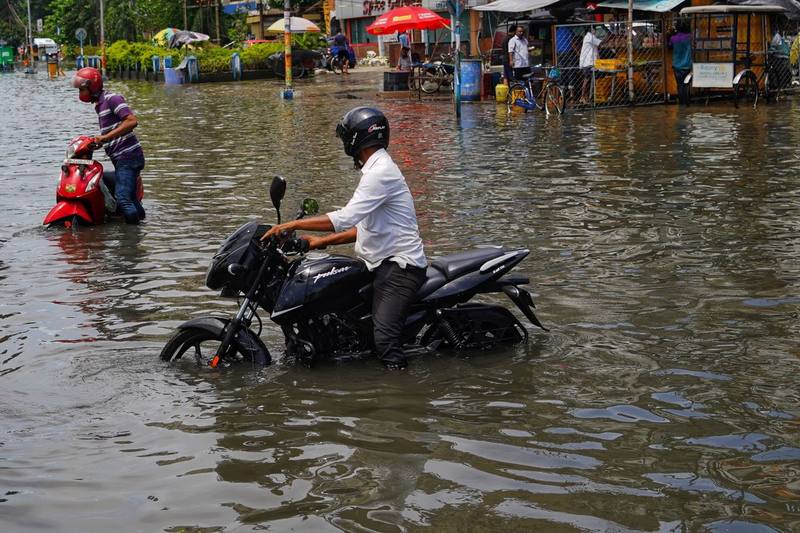
Flooding after heavy rain in India's Upper Assam region between July 18 and 20 killed more than 100 people, destroyed 2,700 villages and displaced 700,000, Al Jazeera reported on August 22.
The state government said 1.2 million people were affected in total. Incessant rain submerged Upper Assam and the neighbouring Naga Hills of Nagaland, where several border districts saw heavy rainfall and dozens of landslides. Runoff from rivers originating in the Naga Hills swelled and caused devastation downstream, though monsoon floods usually hit northern, western and parts of central Assam hardest.
Debiram Panika, a 37-year-old daily wage labourer from Sivasagar district, said he was working in Dimapur, Nagaland, when his wife Dipika called in panic at about 11am on July 19. “I could only see my wife telling me on the video call, ‘This is it for us. We are going to die,’ before the call was disconnected,” he said. Moments later, waters from the Dikhow River swept away Dipika, 30, and their four-year-old daughter Radhika; Radhika’s body had not been found by the time of reporting.
Several riverine villages in Sivasagar were wrecked by debris carried by the Dikhow from the surrounding hills, with tens of thousands of tree trunks piled where homes had stood and rice fields washed away. “Trees as tall as 30 to 40 metres (100-130ft) came down from the hills, flooding the river, and wiped out everything as they crashed against our homes,” said Kukil Das, a 30-year-old vlogger from Nepali Khuti. Das and Shravan Prasad of neighbouring Bihubor said they saved at least 1,000 people using seven boats, while Laxmi Sharma, 46, sheltered at least 60 people on her terrace.
The disaster triggered a dispute over whether mining and deforestation worsened the flood. Biren Gogoi, 43, blamed stone and sand mining in regional rivers, deforestation and coal extraction in Nagaland’s Mon district; Global Nature Watch data showed Nagaland lost 14 percent of its tree cover between 2002 and 2025, with Mon the worst affected district. Mon Deputy Commissioner Wennyei Konyak said illegal mining was possible but added, “I would not blame mining activities for the flood. It was just the wrath of nature.” Assam Chief Minister Himanta Biswa Sarma rejected allegations over illegal riverbank excavation on August 4 and blamed excessive rainfall in Nagaland, while state minister Ranoj Pegu later cited erratic rainfall due to climate change.
Mirza Zulfiqur Rahman, a researcher on the Brahmaputra river basin, said the flood was “purely human-made” and caused by the fracturing of the landscape. “The unrestrained stone extraction from the Dikhow riverbed has damaged the river’s natural cushion,” he said. Assam has seen frequent floods since a magnitude 8.6 earthquake in 1950 altered the region’s river system and killed nearly 5,000 people; in Prajabasti village, 75-year-old Asor Ali said, “It will happen again, so long as there is greed for land and coal in humans.”
Support nwsTrail
nwsTrail is an independent global news site. Your support helps keep the content free and independent.