NASA astronaut recalls Mir station crisis: Russian cosmonaut took blame for collision
Saturday, 25 July 2026 22:25
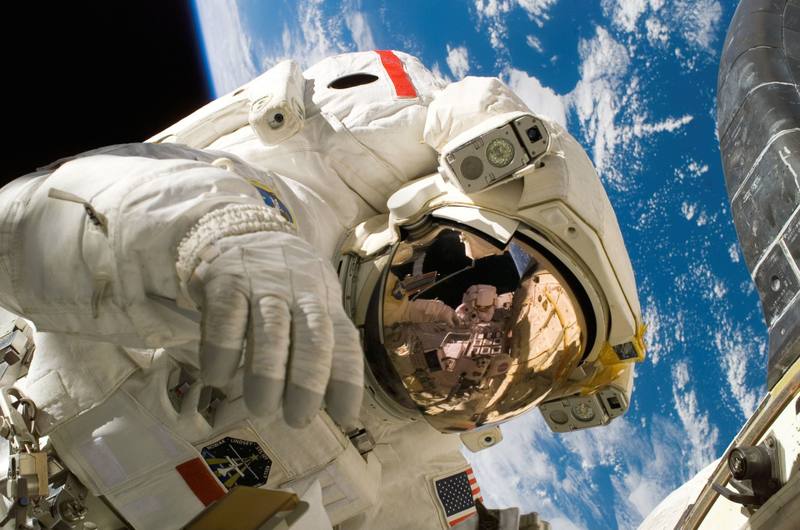
On May 25, 1997, the unmanned Progress spacecraft crashed into the Mir space station during a manual docking attempt, tearing a hole in the Spectrum module. The life-threatening incident that occurred on Mir is the subject of a new documentary series on the American public television network PBS, "Once Upon a Time in Space." In an interview, NASA astronaut Michael Foale, who was at the center of the events, talks about the real causes of the collision and its humiliating consequences for the Russian cosmonaut.
The collision caused a loss of pressure in the station and made the situation life-threatening for the crew. Astronaut Michael Foale and cosmonauts Vasily Tsibliyev and Aleksandr "Sasha" Lazutkin were able to stabilize the station with only 23 minutes of oxygen and stop the leak, preventing the station from spinning out of control.
"The root cause of the accident was an attempt to save money," explained Foale, who has participated in six missions. "They tried to do a manual docking much further than usual, without radar." The radar system was built in Ukraine and cost two million dollars at the time, which the leaders of the Russian space program did not want to pay.
Instead, the Russian space corporation Energia decided at the last minute to have the crew test a manual docking from a distance of six kilometers without radar. The test was carried out on a Progress spacecraft filled with debris from Mir, which was about to crash into the Pacific Ocean.
But the test went horribly wrong. Cosmonaut Vasily Tsibliyev was unable to determine the exact speed of Progress' approach from real-time measurements. "He could not judge the distance well, but to calculate the speed you need to know the distance first and then divide it by the time," Foale noted. "That was not possible in that situation and was never tried again."
Due to the higher speed than expected, Tsibliyev was unable to avoid the collision. Progress hit the Spektri module, damaging it and bending one of the solar panels. A crack appeared at the base of the solar panel, from which air began to leak. After the collision, Progress was still able to fire its engines and deorbit into the Pacific Ocean as planned.
After the incident, an adapter was sent to the station to restore electrical power through the Spectrum module. Vasily and Sasha were to perform an internal spacewalk to reconnect the cables they had disconnected to save the station. However, due to the stress of the impact, Vasily did not pass the pre-spacewalk medical test.
"The day after, the program manager, Valery Ryumin, called and said, 'Michael, you're on the radio. Would you be willing to go and do an internal spacewalk to the Spectrum module instead of Vasily?'" Foale recalled. "I just knew that this would cause a huge problem between Vasily and me because it was so humiliating for him. And he took all the blame for the impact on himself, which was unfair."
Michael Foale retired in 2013 after a 30-year career with NASA. He admits that adjusting to life on Earth was initially frustrating. Now, at 69, he has found new pursuits, but looking back on the space age, he thinks it's a fairy tale. "I was naively optimistic about international space cooperation," he said.
Support nwsTrail
nwsTrail is an independent global news site. Your support helps keep the content free and independent.