Trump's Election Speech: Alleged Chinese Interference and Fraud Claims
reede, 17. juuli 2026 07:38
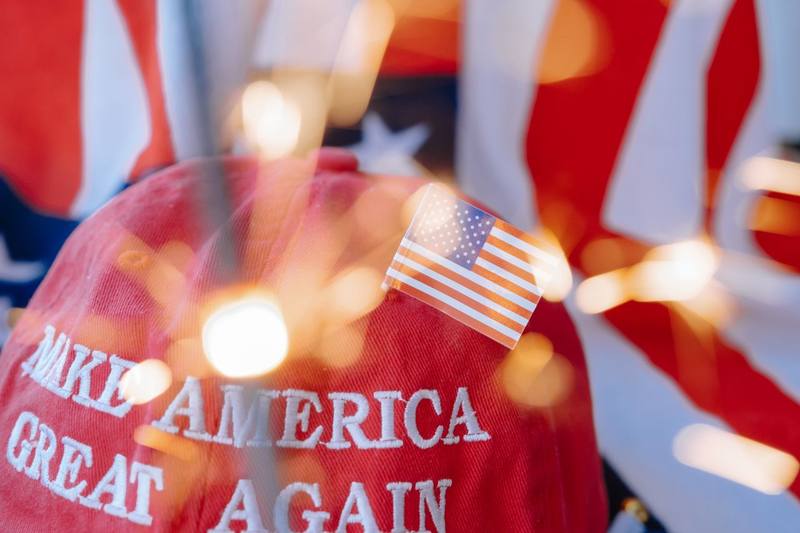
US President Donald Trump gave a speech on Thursday night in which he sought to portray the security of the US election as under threat, hoping to pressure the passage of controversial legislation and convince Americans to accept his widely debunked claims about fraud in the 2020 election.
Trump lost that election to Joe Biden by about seven million votes and 306 to 232 in the Electoral College. While he also commented on the economy, immigration and crime, the speech focused on the election.
Despite the media frenzy that preceded it, it did not contain any of the “bombshells” that the president had previously promised. Instead, Trump talked about the release of documents that he said “expose an election system that is so broken and so vulnerable that no one can defend it. It is not defensible.”
Trump’s claims included China’s alleged manipulation of voter data, an alleged conspiracy by U.S. political and security establishment to minimize Chinese interference, and a broader effort to lull the American public into sleepwalking about the integrity of the election.
The New York Times, CNN, and many other U.S. media outlets noted that while the documents had only just been declassified, they largely addressed vulnerabilities that had been known for years and that election officials had been trying to fix.
Maggie Haberman of The New York Times, co-author of a recent best-selling book about the president, wrote that Trump had made “at times bizarre claims.”
The CNN report noted that while the documents themselves had only just been released, “they largely address vulnerabilities that had been known for years and that election officials across the country had been trying to address.”
The Associated Press wrote that the speech “provided no evidence that votes were manipulated or that the election results were altered.”
Many U.S. media outlets either did not air Trump’s speech live, aired it partially, or did fact-checks during or after the speech, as Trump has a habit of using live broadcasts to spread misinformation.
The decision by the broadcasters has predictably drawn Trump’s ire. He claimed their decision was motivated by malicious intent, The Hill reported.
“They don’t like this because they know how corrupt our system is, and they don’t want to expose it. They and others in the media are part of a conspiracy,” he said.
On the one hand, many expressed serious concerns about the potential of Trump’s claims to undermine public confidence in the election and pave the way for further sweeping White House actions.
Speaking on MS NOW, Senator Mark Warner (D-Virginia) said moments after the speech that he was embarrassed that Trump had made what Warner called “a whole series of lies, accusations designed to undermine America’s trust in our system.”
Dan Pfeiffer, a former Obama aide turned podcaster, wrote on social media that he understood why some major networks did not broadcast Trump’s speech.
“But from a political perspective, I would like to see this speech reach every voter in the battleground,” Pfeiffer added.
Trump has presented the controversial legislation as a solution to the weaknesses of the American electoral system. His critics see it as a combination of voter suppression and presidential power grab.
Toeta nwsTraili
nwsTrail on sõltumatu välisuudiste veebileht. Sinu toetus aitab hoida sisu tasuta.